Is It Better To Lease Or Buy A Car A Definitive Guide?
When you're thinking about getting a new car, one of the first questions you might ask is: should i lease or buy a car? Many of us face this decision, and the answer can depend on your lifestyle, budget, and how long you plan to keep the car. Traditionally, most people in the UK purchased their vehicles through Personal Contract Purchase (PCP) plans, but this is changing. Leasing is becoming increasingly popular, especially with the rise of electric vehicles (EVs).
Leases offer flexibility, lower monthly payments, and the opportunity to drive a new car every few years. In fact, around 1.9 million of the five million leased vehicles in the UK are private leases. But the real question is: is leasing a car a good idea for you? To help you decide which option is best for you, let's look at the pros and cons of leasing a car versus buying a car.
What is car leasing?
Car leasing is similar to renting a car for an extended period of time, usually between two and four years. You pay an initial deposit, then make fixed monthly payments throughout the lease term. It's a popular choice for those who enjoy driving the latest models but don't want to commit to long-term ownership.
To make an informed decision, we recommend using our Total Car Check before leasing or purchasing a vehicle to make sure you understand its history and condition.
When you lease a car, you do not actually own it. The car remains the finance company's property, and at the end of your lease, you must return it. Some leasing companies may allow you to buy the car if you want, but this is usually not included in the deal. Leasing is also different from buying a car, as you are limited in mileage and must keep the vehicle in good condition to avoid additional charges. It is ideal for those who prefer lower payments and the freedom to switch cars regularly.
There are pros and cons to leasing a car
Car leasing advantages:
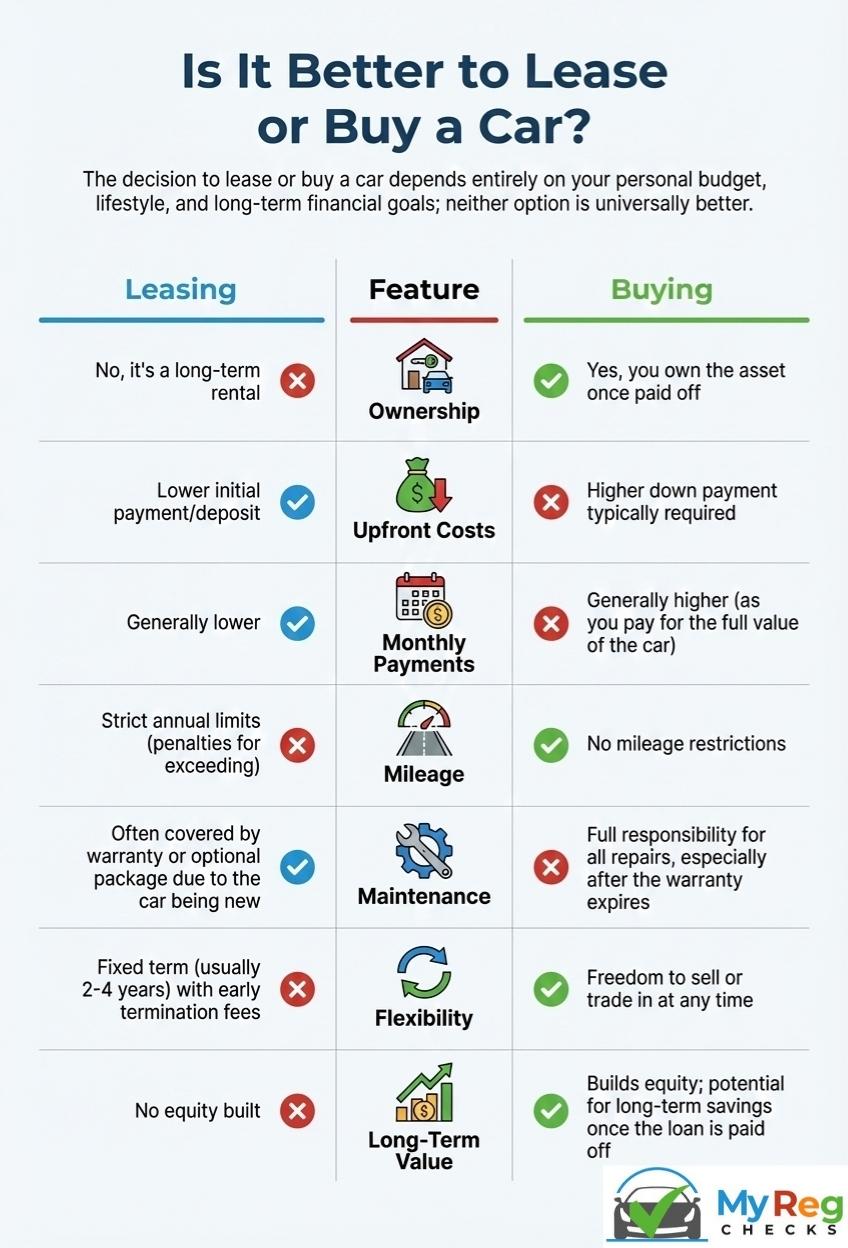
Leasing a car offers several advantages. One of the primary benefits is that monthly payments are typically lower than if you were financing a vehicle. You also do not have to worry about selling the vehicle later or dealing with depreciation. Leasing allows you to drive a new car every few years, and with shorter contracts, you can easily switch to another model. Furthermore, the car is usually under warranty, so maintenance costs are low.
Car leasing disadvantages:
However, leasing has its drawbacks. The biggest disadvantage is that you don't own the car, so once the lease ends, you must return it. There are also strict mileage limits in place, and exceeding them may result in additional charges. If you need to terminate the lease early, it can be costly, and the terms can be longer than expected.
What are your options when purchasing a car?
When it comes to buying a car, there are several options to consider, each with advantages and disadvantages.
Payment Options: Cash or Credit Card
One option is paying upfront with cash or using a credit card. This means you own the vehicle outright and do not have to worry about monthly payments or interest. However, keep in mind that cars depreciate over time, and if you use a credit card, you may incur additional interest charges. If you're purchasing a used car and trying to decide whether to lease or buy used car, use our car finance check to ensure no outstanding finance is attached to the vehicle.
Car Loan:
Another option is taking out a car loan. This allows you to spread the cost of the car over time through monthly payments. A good credit score can help you get a loan with a lower interest rate. If you choose a secured loan, you must provide collateral, but the interest rates are typically lower.
Hire-purchase (HP):
With Hire Purchase (HP), you rent a car with the intention of purchasing it at the end of the agreement. You make regular monthly payments, and once the final payment is made, you own the car. In the car lease vs hire purchase discussion, HP typically comes with higher monthly payments and less flexibility than other options.
Personal Contract Purchase (PCP):
Finally, there is the personal contract purchase (PCP). This option requires a deposit and monthly payments for two to four years, with the option of making a balloon payment at the end. You can return the car, pay the balloon to own it, or use any equity to buy a new car. It's a flexible option, but the car remains the finance company's property until the balloon payment is made.
The pros and cons of purchasing a car outright
Pros of Purchasing a Car:
One of the primary advantages of purchasing a car outright is that you own it entirely, allowing you to drive it as much as you want without regard for mileage limits. You also have the option to sell the car whenever you want. Leasing a car vs buying: When you buy, there are no restrictions on how you use the vehicle, unlike leasing agreements.
Cons of Purchasing a Car:
However, buying a car comes with some challenges. Monthly payments are typically higher than with leasing, and finance agreements are often longer than lease contracts, making them less flexible. Another disadvantage is that cars lose value over time due to depreciation. In addition, you must pay for maintenance and road taxes. Selling a car can also take time and effort, especially if you want to get a fair price for it.
Leasing vs buying a car: What sets them apart?
When deciding between these options in the finance vs lease debate, think of it like renting a house versus buying one. When you buy a car, especially through financing options such as PCP or HP, you are essentially renting it with the possibility of owning it at the end of the agreement. Unless you make a final payment to purchase the vehicle, the finance company retains ownership.
On the other hand, leasing a car is similar to renting. You agree to use the car for a set period of time, typically with mileage and maintenance restrictions. At the end of the lease, you return the car, and you don't own it. Leasing allows you to have more flexibility and lower monthly payments, but you do not own the vehicle as you would if you bought it.
Lease vs Finance: When leasing might be the smarter choice
Leasing a car can be the smarter choice for some people, especially if you prefer lower monthly payments instead of owning a car outright. It's ideal if you enjoy upgrading to a new model every few years and don't want to go through the hassle of selling an old car. Leasing offers predictable bills, allowing you to avoid unexpected costs such as maintenance.
Leasing can also be an excellent option if you use your vehicle for business purposes, as lower lease rates may be available. It is ideal for those who have consistent driving habits and want to enjoy a new car without making a long-term commitment to ownership.
Scenarios where buying makes better sense
In some cases, purchasing a car may be more practical. If you want complete ownership and the ability to keep the car for as long as you want, purchasing is the way to go. It's also a good option if you don't want to be bound by mileage restrictions, which are common in leases.
If you drive a high number of miles each year, buying may be a better option because it avoids excess mileage fees. If you have a lump sum available, purchasing can save you money in the long run. Finally, buying is often the best option if you believe your financial situation will change in the future.
Leasing vs finance car: What's the difference?
The primary difference between car finance vs lease is ownership. When you finance a car, either through HP or PCP, you're working towards owning it. Leasing, on the other hand, is similar to renting—it is a temporary arrangement with no option to purchase the vehicle.
If you’re still debating whether to lease or finance car, it's important to consider the terms, mileage limits, and any penalties for missed payments when deciding between the two options.
Things to Consider When Deciding Whether to Lease or Buy a Car
How long do you keep your car?
How long you keep a car is a big part of the lease or buy decision. If you normally buy a car and keep it for a long time, paying in cash often works out best because you can run it for years without being tied to a contract.
If you like changing cars every few years, leasing may suit you more. Many UK lease deals last two to four years, so you can switch to a newer model on a regular cycle. You are also more likely to be driving a car that is still under the manufacturer’s warranty, which can make costs feel more predictable.
Do You Have the Budget or Savings to Buy a Car Upfront?
Buying a new car with cash can be a big financial step, because the price is often higher than people expect. Even smaller, entry-level models can cost a lot now, with cars like the Vauxhall Corsa and Renault Clio often starting at around £20,225 and £17,995 respectively. If that would wipe out your savings, buying outright may feel too heavy.
Leasing can make budgeting easier because the cost is spread across monthly payments. You usually still have to pay something up front, but it is less than the full price of the car. Many UK lease deals require an upfront payment that is equal to three, six, or nine months' worth of monthly payments.
Is Car Ownership Important to You?
Car ownership matters to some people, so it is worth thinking about before you sign anything. With leasing, you do not own the car at any point because it is a long-term hire, and the leasing company keeps ownership.
For many drivers, this is fine, especially if they like changing cars often and want clear monthly costs. If owning the car is important to you, leasing may not feel right. If that is the case, you could look into other options, like a car finance agreement or a PCP deal, which can help you become the car owner later on.
How Does Car Depreciation Affect Leasing vs Buying?
Depreciation matters most when you buy a car, because you carry the loss in value yourself. A new car usually drops in value as soon as it leaves the showroom, and that can hurt if you sell after only a few years. If you change cars often, the gap between what you paid and what you sell for can be a high cost.
With leasing, depreciation is not your problem in the same way, because it is built into the monthly payment. You hand the car back at the end, so you are not trying to recover its resale value.
However, depreciation still has an impact on lease prices because the leasing company estimates the car's future value and arranges your monthly payments accordingly.
Cars that keep their value can sometimes be surprisingly affordable to lease. That’s because the leasing company expects the car to still be worth a decent amount when you hand it back. Since they are likely to lose less money on depreciation, the monthly payments can be lower.
Which Option Offers Better Long-Term Value for Money?
Value for money depends on what you want from the deal. Leasing can look cheaper month to month, but you are paying to use the car, and you will hand it back at the end. That means you do not create any ownership value.
Buying can be more expensive upfront or monthly, but you may be able to sell something later. If owning a car is not important to you, leasing can still provide good value by allowing you to drive a new car every few years at a predictable cost.
What’s the Difference Between PCH and PCP Car Finance?
PCH and PCP sound similar, making them easy to mix up. PCP is a way to finance a car, and PCH is a way to lease one. Both choices let you spread the cost of a new car over time instead of all at once.
Both PCH and PCP typically require an initial payment and then monthly payments over a set period of time. With PCP, this is referred to as a deposit, while with PCH, it is commonly referred to as an initial payment. Most agreements also include an annual mileage limit, so choose a figure that fits your driving needs.
The key difference is what happens at the end. With PCH, you normally hand the car back and walk away, because the deal is based on long-term hire. With PCP, you have more choice, because you can return the car, use any value in it towards another car, or pay an optional final payment to own it.
Neither option is always preferable, as it depends on what you want from the car. If you enjoy keeping a car for many years and want full ownership, purchasing or getting financing that leads to ownership may be appropriate for you. If you prefer a newer car with a manufacturer's warranty and enjoy changing cars every few years, PCH can feel more straightforward and predictable.
Common questions about leasing and buying a car
Can you end a lease early, and what are your options?
Yes, you can cancel a car lease early, but there are a few options. One option is to pay an early termination fee, which allows you to end the contract. Another option, if your lease agreement allows it, is to transfer the lease to someone else. This way, the responsibility and the car are transferred to another person, releasing you from the lease.
Can someone else take over your lease?
Yes, someone else can take over your car lease, but only if your lease terms allow it. There are specific requirements to meet, and you must consult with the leasing company to ensure that the transfer is possible and follows the proper procedure.
What are the different types of car leasing agreements UK?
In the United Kingdom, there are several types of car leasing agreements. The most common is Personal Contract Hire (PCH), which involves renting a car for a set period of time and returning it at the end. Personal Contract Purchase (PCP) allows you to buy the car after the lease ends, whereas Hire Purchase (HP) involves renting the car with the option to own it after all payments are made.
How do rent-to-own car schemes compare?
Rent-to-own car schemes are an excellent option for those with poor credit. You rent the car, and your payments gradually lead to ownership. However, these schemes often involve older cars with higher mileage and do not provide the same warranty coverage as traditional leasing. They can be a good way to own a car, but they come with certain drawbacks to consider.
Is leasing more cost-effective than buying in the long run?
The cost-effectiveness of a lease vs buy car is determined by your specific situation. Leasing typically has lower monthly payments but does not provide ownership at the end. It's similar to renting a house: you pay for its use but never own it.
On the other hand, purchasing, especially through PCP finance, gives the impression of ownership but requires larger deposits and monthly payments, similar to a mortgage. If you want to own the car eventually, buying may be more cost-effective in the long run.
Is leasing a financially wise decision?
Leasing can be a financially sound choice if you prefer lower monthly payments and enjoy driving a new car every few years without the commitment of ownership. It provides flexibility, but it does not add long-term value because you do not own the vehicle at the end. However, if you intend to keep a car for several years or want to avoid ongoing rental costs, purchasing may be a better financial decision in the long run.
Car leasing or buying, which is better for short-term drivers?
Leasing often suits short-term drivers in the UK if you want a newer car for two to four years and prefer fixed monthly costs. It can work well when you drive a regular number of miles and can stay within the mileage limit. Buying can be better if you might possibly change plans early, because ending a lease early can be expensive, and a good used car can be sold whenever you are ready.
Lease vs finance car, which is easier to qualify for?
Both leasing and finance deals usually involve a credit check and an affordability check, so neither route is automatically easier. In practice, approval depends on your income, your monthly outgoings, your credit history, and how much deposit you can put down.
If your credit score is lower, approval is usually harder, but you may still find some finance providers who will consider you based on your income and affordability, often with higher costs or a larger deposit. However, you should compare offers, check your credit file, and avoid applying for lots of deals at once.
Is leasing a car cheaper than buying with insurance and fees included?
Leasing may appear to be less expensive because the monthly payment is lower, but the total cost can be higher when all factors are considered. In the UK, lease prices often include road tax, but you usually still pay insurance, and you may also have to pay for servicing, tyres, and wear and tear.
To check, add up everything you would pay on the lease over two to four years, including the upfront payment, monthly rentals, insurance, servicing, tyres, and any mileage charges. Then do the same for buying by adding the purchase and running costs, and subtracting what you expect to sell the car for at the end.
Is car leasing worth it if you want to modify the car?
Leasing is usually not a good fit if you want to modify the car, because most contracts expect it to be returned in standard condition. Even minor modifications, such as wraps, tints, and non-standard wheels, can result in additional charges.
Some small changes may be allowed with written approval, but they often still need to be removed before the car is handed back. If you really want the modifications, buying is often the simpler choice because you can keep the changes or sell the car with them later.