Bikes
Bikes Vans
Vans Motorhomes
Our car write-off check helps you enter a UK registration and search official insurance records before buying a used car. In seconds, you can check if a car has been written off, spot hidden damage history, and see the vehicle’s write-off status before you spend your money.
A repaired car can look fine on the driveway but still have a serious write-off history hidden in its records. That is why a free car write-off check is a smart first step, whether you are comparing adverts, checking your own vehicle, or doing a full vehicle history check for extra peace of mind.
How to check if a car is a write-off (step-by-step)
1. Enter the registration
Enter the UK registration number to run an insurance write-off check with My Car Reg Check. This gives you a quick way to check the car’s identity before you go any further, which is especially useful when you are comparing several adverts at once.
2. Review the free vehicle details first
Use the free results to make sure the key details match the car in front of you. Check the make, model and other basic data carefully, because a mismatch can be a warning sign that the seller has not told you the full story about the car’s past.
3. Upgrade for the full write-off record
If everything looks right, move to the full report to see whether insurance companies have ever declared the vehicle a total loss. Our full check helps you see recorded write-off categories, loss dates and insurance salvage markers, so you can understand the vehicle’s damage history before deciding what to do next.
Even if the report shows the car has been repaired, do not rely on the seller’s word alone. Ask the seller for repair invoices and have the car inspected by a qualified mechanic.
That extra step matters with any vehicle that may have had serious damage, because a clean-looking car can still hide poor repairs underneath. It is the best way to make an informed decision before you buy.
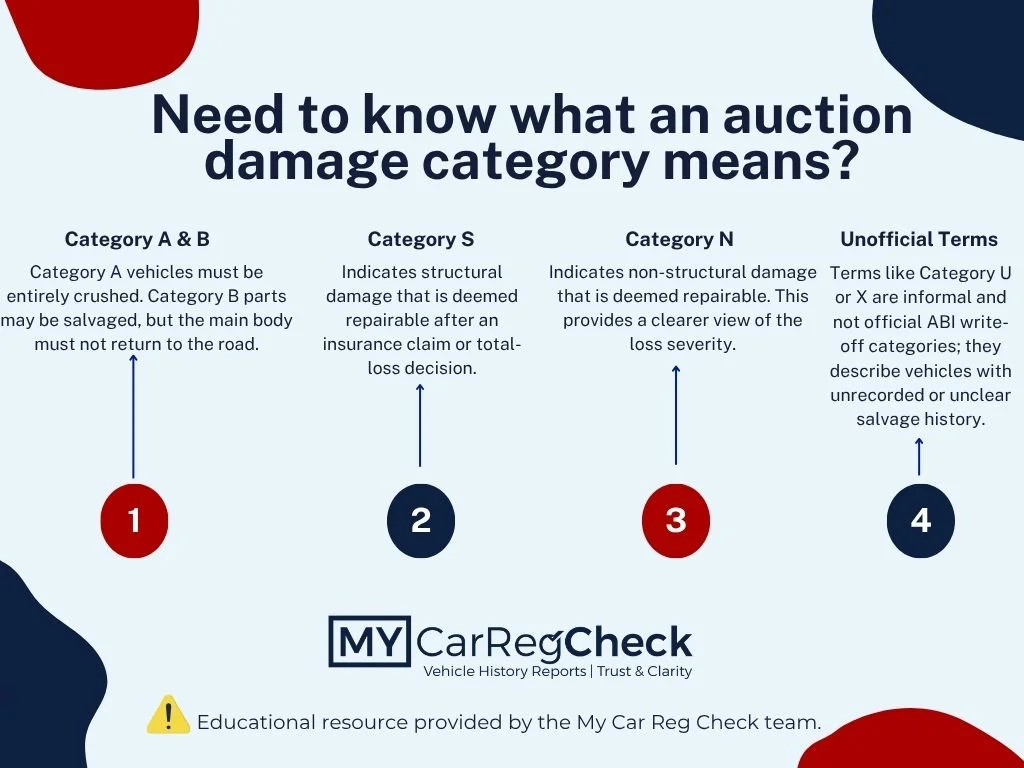
Car insurance write-off categories explained
When a car is declared a total loss, the insurer puts it into one of four write-off categories, and a car category check can help you understand what that means before you buy. These categories tell you how serious the damage was and whether the car can ever go back on the road.
Category A (Scrap)
This car is beyond saving. It is so badly damaged that the whole vehicle must be crushed, and no parts should be used again. A genuine Cat A car must never be driven.
Category B (Break)
This car is also too badly damaged to return to the road. The body shell has to be crushed, although some usable parts may be removed and sold. The vehicle itself must never be repaired or driven again.
Category S (Structural damage, repairable)
This means the car has damage to its main structure, such as the chassis, crumple zones, or mounting points. That could mean a bent or twisted chassis, collapsed crumple zones, or compromised mounting points. A Cat S car can be repaired and returned to the road, but only if the work is done properly and the car is made safe, and a Cat S check can help you review that history before you buy.
Category N (Non-structural damage, repairable)
This means the main structure has not been damaged, but the car may still need important repairs. That could include non-structural damage like cosmetic panel damage, electrical faults, or issues with the braking or suspension systems. A Cat N car can also go back on the road once it is in roadworthy condition.
If a vehicle has been recorded with non-structural damage, our cat n car check can help you look into that history before you decide whether to buy.
The current system came in during 2017 and replaced the old Cat C and Cat D labels. As a simple guide, old Cat C is close to today’s Cat S, while old Cat D is close to Cat N.
If you are checking a used car, this is the key thing to remember: Cat A and Cat B should never be driven, while Cat S and Cat N may be safe only if they have been repaired to a proper standard.
Write-off data from MIB vehicle salvage and theft records
When people search for a DVLA write-off check, it is easy to assume the write-off marker is created by the DVLA. In reality, write-off categories are recorded through insurance industry data, not decided by the DVLA.
This data was historically held on MIAFTR, the Motor Insurance Anti-Fraud and Theft Register, and is now held within MIB’s Navigate Vehicle Salvage & Theft Data service. It helps show whether a used car has a hidden write-off or stolen vehicle history before you buy.
At My Car Reg Check, we use insurance industry salvage and theft data to help identify vehicles that have previously been written off or reported stolen. The data is managed through the Motor Insurers’ Bureau’s systems, and a recorded write-off normally remains part of the vehicle’s history even if the car is later repaired and returned to the road.
That matters because a private seller does not have the same duty as a dealer to spell out every part of the car’s past. A car can look tidy, drive well, and still carry a serious write-off history that affects safety, value, and insurability.
This is why a proper write-off check is so important: it helps you see the hidden record, not just the seller’s version of events, and a salvage history check can give you extra clarity where severe damage history may be involved.
Tips for buying a written-off car
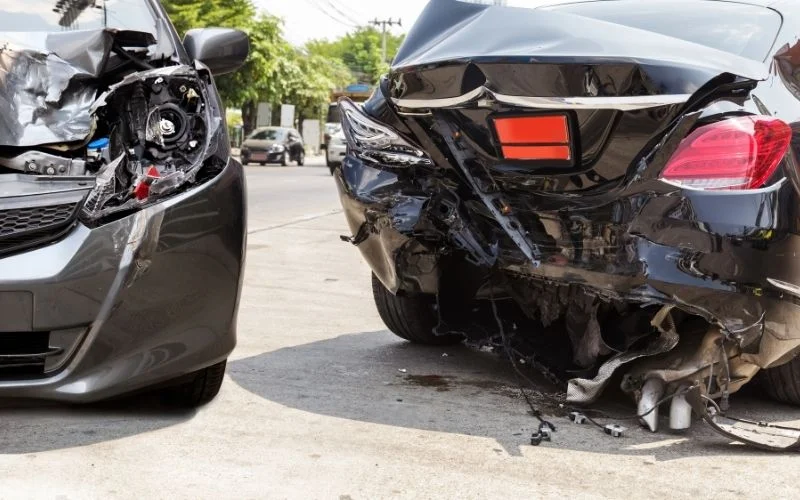
A Cat S or Cat N car can be cheaper than an equivalent model with a clean history, sometimes by a meaningful margin. But a lower price should never be the reason you overlook risk, especially when the damage may affect safety, insurance, or future resale.
If our report flags a write-off, we recommend three checks before you agree to buy:
Ask for repair evidence.
Request clear invoices, photos, and a written breakdown of what was damaged and how it was repaired. If the seller cannot show proper paperwork, assume you are missing part of the story.
Pay for an independent engineer’s inspection.
This matters most for Cat S cars. A qualified inspector can check chassis alignment, panel fit, and the overall standard of the repair. That extra cost is small compared with buying a car that looks tidy but has underlying structural issues.
Run a full history check and check the outstanding finance.
Make sure you confirm the write-off category, loss date, mileage record, theft markers, and whether the vehicle is still linked to a finance agreement. A cheaper car is not a bargain if it comes with outstanding finance or problems you only discover later.
One practical rule we always give customers: if the seller gets defensive when you ask for paperwork or an inspection, walk away. A genuine seller of a properly repaired Cat S or Cat N car should expect those questions.
Previously written-off cars can be harder and more expensive to insure, and some insurers may refuse cover altogether. Get insurance prices before you commit, not after.
Is a write-off marker permanent?
Yes. Once a vehicle is recorded as a total loss, the write-off marker stays with it for life. Even if the car is fully repaired and safely returned to the road, that history does not disappear.
That matters when you buy or sell, because the write-off marker will usually have an impact on resale value compared with an equivalent vehicle with a clean history. In simple terms, repair work can restore the car, but it cannot erase the record.
Can I insure a Cat S or Cat N car?
Yes, in most cases you can insure a Cat S or Cat N car. Many major insurers will offer cover, but premiums are often around 15% to 20% higher than for a similar car with no write-off history, and some may ask for an engineer’s report before they quote.
The key point is disclosure. You must tell the insurer that the vehicle has been written off. If you do not, your policy could be invalid, which is the last surprise you want after making a claim.
- Please note: The estimated 15-20% increase in premiums is based on current UK market averages for previously written-off vehicles. Actual costs vary significantly between insurers, and some providers may decline cover for certain salvage categories entirely. We strongly recommend obtaining a specific insurance quote before finalising your purchase.
Will my write-off car need a fresh MOT?
Yes, if the car is Category S, it will need a fresh MOT after the repairs are finished. It must also be re-registered with the DVLA before it can legally go back on the road, even if the old MOT had not yet expired.
Category N is different. A repaired Cat N car does not automatically need a fresh MOT or formal inspection before it is driven again, but it still needs to be genuinely roadworthy. In both cases, we would always advise checking the paperwork carefully before you buy.
Frequently Asked Questions
What Does an Insurance Write-Off Mean?
An insurance write-off means the insurer has decided the car is either too badly damaged to repair safely or too expensive to repair compared with its market value. In other words, the car has been declared a total loss from an insurance point of view, even though some vehicles, such as Cat S or Cat N cars, may still be repaired and used again.
That distinction matters. A write-off does not always mean the car is only fit for scrap, but it does indicate that there has been a serious event in its history that may have an impact on safety, insurance costs, and future resale value.
What Happens If My Car Gets Written Off by the Insurer?
If your vehicle is written off, the insurer will usually assess the damage, categorise it, and pay you based on its pre-accident market value. In most cases, once the payout is agreed upon, the insurer assumes ownership of the vehicle.
If the vehicle is Cat S or Cat N, you may sometimes have the option to keep it and arrange repairs yourself, although the payout will usually be reduced to reflect the salvage value. If you think the insurer’s valuation is too low, do not rush to accept it — gather evidence from similar cars for sale and challenge it before agreeing.
Is It Safe to Buy a Car That Has Been Written Off?
It can be, but only in the right circumstances. You should never buy a Cat A or Cat B car for road use, because those categories must not return to the road. With Cat S or Cat N, safety depends on the quality of the repairs, not just the category itself.
That is why we always recommend checking the full history, asking for repair invoices and photos, and paying for an independent inspection if there is any doubt. A written-off car can save you money, but only if the repairs were done properly and you know exactly what you are buying.
Why Have the Car Write-Off Categories Changed?
The categories changed to give buyers a clearer picture of the type of damage a car had suffered, not just whether the repair bill looked too high. The older Cat C and Cat D labels were mainly tied to repair cost, which did not always tell you much about the car’s actual condition.
The newer system, introduced in 2017, puts more focus on whether the damage is structural or non-structural. In simple terms, it helps you understand whether the car’s core safety structure was affected, which is far more useful when you are deciding whether a repaired car is worth considering.
How Do Insurers Determine If a Car Is a Write-Off After an Accident?
After an accident, the insurer will usually arrange for the vehicle to be inspected and valued. They look at the damage, estimate the repair cost, and compare that with the car’s market value before the accident. If the repair cost is too high or the damage is too severe to be repaired safely, the car may be written off.
It is not always the case that a car is completely wrecked. Sometimes a vehicle is declared a write-off because repairing it to the proper standard would cost more than the insurer considers reasonable. That is why even a car that starts and drives can get a write-off.