Bikes
Bikes Vans
Vans Motorhomes
You cannot instantly find a private person’s name and address online from a registration number in the UK because of GDPR and wider UK data protection rules. A public number plate check can show lawful vehicle data, but it cannot reveal someone’s personal details or personal information. If you have a genuine legal reason, you may be able to request DVLA registered keeper information from the DVLA by showing reasonable cause. If your aim is to understand the car rather than identify the person, a vehicle history check is usually the safer and more useful route.
At My Car Reg Check, we can help you view lawful background data such as vehicle ownership history, MOT records, and finance markers, but we do not offer anything unlawful or misleading. You can start with a car number plate check if you want to review the public-facing details first.
Can You Find a Car Owner by Registration Number in the UK?
No, you cannot legally use a public number plate check to identify a private person, registered keeper, or vehicle owner by name or home address in the UK. What you can do is check public vehicle data and, in limited cases, apply to the DVLA for keeper information if you can show reasonable cause.
A lot of confusion comes from the question of registered keeper versus owner. The registered keeper is the person or organisation responsible for registering and taxing the vehicle. The owner is the person or business with legal title to it. Sometimes they are the same person. Sometimes they are not.
That happens more often than people think. A lease vehicle may be legally owned by a finance or leasing company, while the registered keeper is the business or organisation responsible for its day-to-day use. A family car may be registered in one person’s name while another paid for it. That is why the V5C logbook matters, but it also has limits. The logbook itself states that it is not proof of ownership.
If you are trying to work out whether a seller’s story makes sense, look beyond the V5C. Check the latest V5C issue date, compare the VIN, review the MOT record, and look at the vehicle’s background. A VIN check can help you cross-check whether the vehicle and paperwork line up properly. That gives you something useful to act on without breaching GDPR compliance or wider data privacy laws.
How to Request Registered Keeper Details from the DVLA
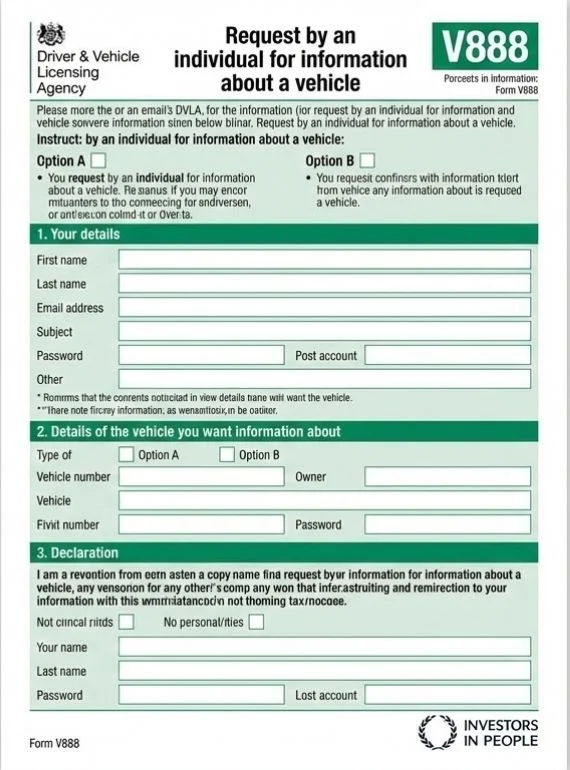
If you have a lawful reason to ask for keeper information, the official route is the V888 form. The DVLA holds the registered keeper database and strictly controls who can access that official data.
You need to:
- Identify the vehicle clearly
- Explain why you need the information
- Show evidence that supports your request
- Include the correct fee
- Send the application to Vehicle Record Enquiries / DVLA Swansea
The postal destination is Vehicle Record Enquiries, DVLA, Swansea, SA99 1AJ. For standard individual V888 requests, the DVLA fee is £5 per enquiry. For certain incident-based individual requests, including a vehicle abandoned on your property, a vehicle trespassing on your property, or keeper details following an incident, the fee is £2.50 per enquiry.
Before posting your application, make sure you include the correct payment by cheque or postal order made payable to DVLA. Do not send cash. Check the official GOV.UK V888 page before posting your application so you use the right route and the right fee.
If all you need is basic vehicle information, start with a public DVLA check instead. Use the V888 route only when you genuinely need keeper information and can support the request properly.
What Constitutes "Reasonable Cause" for the DVLA?
Reasonable cause means a real, lawful, evidence-based reason for asking the DVLA to release keeper information. Some people loosely call it just cause, but the DVLA’s own term is reasonable cause, and that is the standard used in its DVLA criteria and broader data release policy.
The DVLA does not release data because someone is curious, annoyed, nostalgic, or trying to contact a stranger. It looks at each request case by case. A weak explanation, missing documents, or a casual request is unlikely to succeed. Matters connected to disputes, law enforcement, or legal proceedings carry far more weight than personal curiosity.
Examples that may support a request include:
- A road traffic accident
- A hit and run
- A vehicle blocking driveway access or causing a private-land dispute
- An abandoned vehicle
- Drive-offs without payment for fuel, goods, or services
- Suspected fraud or related disputes
That is very different from asking for keeper details simply because you want to buy the car, pursue an online lead, or confirm a suspicion without any real evidence.
Tracing a Hit and Run Driver
If you have been involved in a hit and run, do not try to trace the driver yourself. Contact the police and your insurer as soon as possible, and give them the registration, time, place, photos, witness details, and any dashcam or CCTV evidence you have.
That is the safest route, and usually the fastest one as well. Insurers and enforcement bodies have official access routes that the public does not. In serious cases, a road traffic accident investigation may involve the Motor Insurance Database, ANPR records, and the Police National Computer. That is why the sensible next step is a proper insurance claim, not a private search for the driver.
Private Parking Operators and PCNs
If you have received a private Parking Charge Notice and wondered how the company got your details, the answer is often the KADOE system. KADOE means Keeper at Date of Event. It is the route accredited operators use to request keeper details for a specific parking incident.
This does not mean any private company can pull data from a number plate whenever it likes. Access is tied to strict rules. Operators usually need to belong to an approved trade body such as the British Parking Association or the International Parking Community. You will often see those shortened to BPA and IPC. That membership supports their claim of reasonable cause when they are enforcing parking terms on private land.
That is why private parking fines are handled through a specific legal process rather than a general public search for a vehicle owner. The route is regulated, evidence-based, and limited to defined purposes. The same principle applies in some official enforcement cases involving speeding fines, where only the relevant authorities can access keeper data.
Dealing with an Abandoned Vehicle on Your Property
If a car has been left outside your home, on land you manage, or near your building, trying to trace the keeper yourself is usually not the best first step. In most cases, the better approach is to report it to your local council or local authority.
That is especially true if the vehicle is on a public highway or appears genuinely abandoned rather than temporarily parked. Local councils have the power to deal with abandoned vehicles, and depending on the situation, the issue may also involve blocked access or wider nuisance concerns.
For homeowners and landlords, the practical step is to take photos, note how long the vehicle has been there, record whether it is blocking driveway access, and use the official report an abandoned vehicle route rather than trying to submit a V888 request yourself.
What Ownership Details Can a Vehicle History Check Provide?
A comprehensive car check will not reveal someone’s private identity, but it can tell you a great deal about the vehicle itself. That is usually the more valuable answer. Instead of chasing a person’s name, you can check whether the car’s story adds up.
Depending on the report level, you may be able to see:
- Number of previous owners and broader keeper history
- Ownership period details where available
- Date of registration
- MOT and road tax status
- Outstanding finance
- Insurance write-off records
- Mileage issues
- Theft markers
- Export status
- Lending red flags such as logbook loans
- Valuation and market data
That is where a history check becomes genuinely useful. A car may look fine in the advert, but the report may show repeated keeper changes, finance still attached to it, mileage anomalies, or a record that raises more questions than the seller answered. For many buyers, that is more useful than knowing who the person is.
This is also where My Car Reg Check can help in a practical way. If your real question is whether the car has had a stable life, whether the paperwork lines up, or whether there are hidden buying risks, a proper report gives you useful answers without crossing into restricted personal data.
If keeper history is your main concern, you can find more detail on our check previous owners page. If you want to confirm tax-related status alongside the broader history, a SORN check can also help.
How to Track Down and Buy Back Your Old Car
Trying to buy back an old car you once owned is a completely different situation from dealing with a collision or legal dispute. The DVLA will not release current keeper details just because you miss the car or want to own it again. Nostalgia is not a reasonable cause.
The better approach is to follow the public trail. Start by checking whether the vehicle still appears on the DVLA system and whether it still has a live MOT history.
After that, focus on the places where owners and enthusiasts are most likely to share information about that make or model. Vehicle enthusiast forums, model-specific groups, a classic car owners club, and local social communities are often more useful than formal channels.
This is especially true if the vehicle is a vintage car or a model with a strong enthusiast following. Some people are not trying to contact the current keeper at all. They are simply trying to fill gaps in the car’s history, such as missing service records or lost service books. In that situation, clubs, garages, old dealer records, and enthusiasts may be more helpful than trying to identify the present keeper through an official process.
Frequently Asked Questions
Can I check a car's previous owners for free?
No, not in full. A free car check or DVLA free check can show useful public details such as MOT status, tax information, and basic registration data, but the previous keeper count is usually only available in a paid report.
How can I find the registered keeper if the plate is cloned?
A cloned number plate check will usually lead you to the innocent vehicle whose registration has been copied, not the person misusing it. Treat it as possible vehicle identity theft, gather your evidence, and make a police report straight away. Cases like this are usually handled through police and enforcement systems, so trying to trace the keeper yourself is rarely the right next step.
Who owns a company or lease vehicle in the UK?
In a company vehicle or leasing setup, the legal title holder is often the leasing company, finance provider, or employer.