Bikes
Bikes Vans
Vans Motorhomes
How to Use Our Free Registration Age Checker
Our free checker helps you verify a vehicle’s Year of Manufacture and Date of First Registration using its UK registration number. The checker uses vehicle data taken from DVLA records, helping you confirm the car’s age without estimating it from the number plate alone.
Enter the registration number.
Type the number exactly as it appears on the vehicle. Spaces and capital letters are not usually important, but make sure that letters and numbers have not been confused.
Click the check button.
The registration lookup takes only a few moments. No technical knowledge is needed, and you do not have to decode the number plate yourself.
Review the vehicle’s age details.
The result shows the available manufacturing year, registration year and first registration date. You can also review the vehicle’s DVLA registration record for further registered details.
The basic age check is free and does not require card or payment information. Buyers who need more detail can upgrade to a full vehicle history check covering issues such as outstanding finance, insurance write-offs and other risks that may not be visible from the vehicle’s age.
You can also check the car’s specifications by registration number, including information that may help when comparing vehicles or ordering compatible parts.
Why Is It Important to Know Your Car’s Exact Age?
Checking a car’s exact age helps you assess its current value, investigate its eligibility for ULEZ or Clean Air Zones and understand when age-related maintenance or safety checks may apply.
Depreciation and resale value
Age is one of the main factors used to estimate vehicle depreciation. Mileage, condition, service history and market demand also influence the price, so two cars registered in the same year may have very different values.
Knowing the correct registration and manufacturing dates helps sellers set a realistic asking price. Buyers can use a car value check to compare the vehicle with similar models before making an offer.
ULEZ and Clean Air Zone eligibility
A registration year can give an early indication of whether a vehicle may meet emissions requirements, but age alone cannot confirm compliance. The emissions standard, fuel type, vehicle category and official database record must also be checked.
Drivers entering London should use Transport for London’s official ULEZ vehicle checker. For participating areas outside London, use the government’s Clean Air Zone checker before travelling.
Safety recalls
Manufacturers often organise recalls by model, production period or Year of Manufacture. Confirming the vehicle’s age can help identify whether it belongs to an affected production batch.
The government’s vehicle safety recall service is managed by the DVSA. In most cases, you can search using the registration number, but you may need the make, model and Year of Manufacture if the registration is not available.
Replacement parts and servicing
A model name alone may not be enough when ordering brakes, filters, lights or electronic parts. Manufacturers sometimes change components during a production run, even when the model’s public name remains unchanged.
Check both the manufacturing year and the Vehicle Identification Number before ordering an expensive component. This reduces the risk of receiving a part intended for an earlier or later version.
Insurance and vehicle valuation
Insurers use the vehicle’s registered details when calculating cover and confirming its identity. An incorrect age, model variant or registration date can affect the accuracy of a quotation and may cause delays during a claim.
Imported vehicles deserve extra care because the manufacturing date may be much earlier than the first UK registration. The V5C Registration Certificate should be reviewed alongside the vehicle itself.
First MOT timing
The Date of First Registration helps establish when the vehicle entered the road-testing cycle. In Great Britain, most cars require their first MOT three years after first registration, while private cars in Northern Ireland are generally first tested after four years.
You can check the vehicle’s first MOT date and MOT history for a clearer view of its recorded road history.
Historic vehicle status
A vehicle’s age affects its eligibility for the historic vehicle tax class and MOT exemption. Separate conditions apply to each exemption, including whether the vehicle has undergone substantial changes.
Vehicles built before 1 January 1986 may now qualify for the historic vehicle tax class. If the build date is unknown, a vehicle first registered before 8 January 1986 may also qualify. The registered keeper must apply to change the tax class and still tax the vehicle each year, even when no payment is due.
Check the current historic vehicle tax requirements before relying on its age alone.
How to Identify Vehicle Age Using UK Number Plates
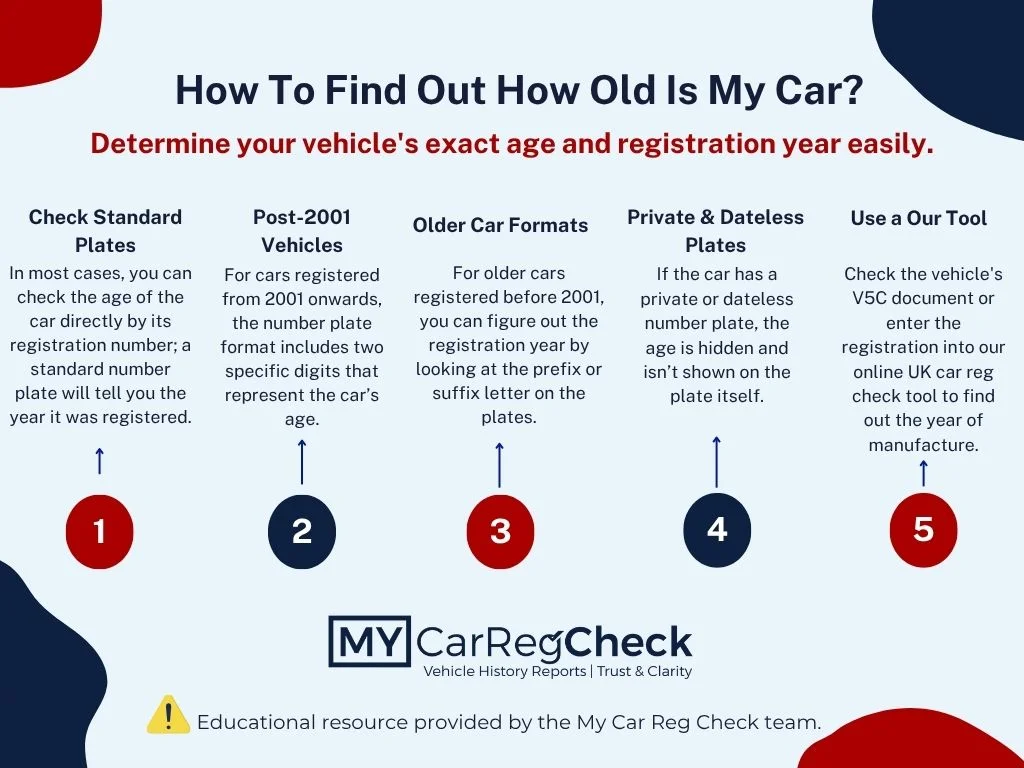
Standard UK number plates can provide a quick indication of when a vehicle was first registered. To decode a UK number plate correctly, you need to know whether it uses the current format, a prefix or suffix registration system, or a plate with no visible age identifier.
Vehicles registered from September 2001 normally display their age through the middle two numbers. Older prefix plates place the identifying letter at the beginning, while suffix plates place it at the end.
A private, dateless, Northern Irish or other non-standard registration may hide the original age marker. In those cases, use the registration checker, the V5C Registration Certificate or the VIN to check the vehicle age.
The Current System: Car Registration Years Explained (2001–Present)
The two middle numbers on a modern UK number plate are the age identifier. They show the six-month period in which the registration was issued; the exact Date of First Registration must be confirmed through the DVLA record.
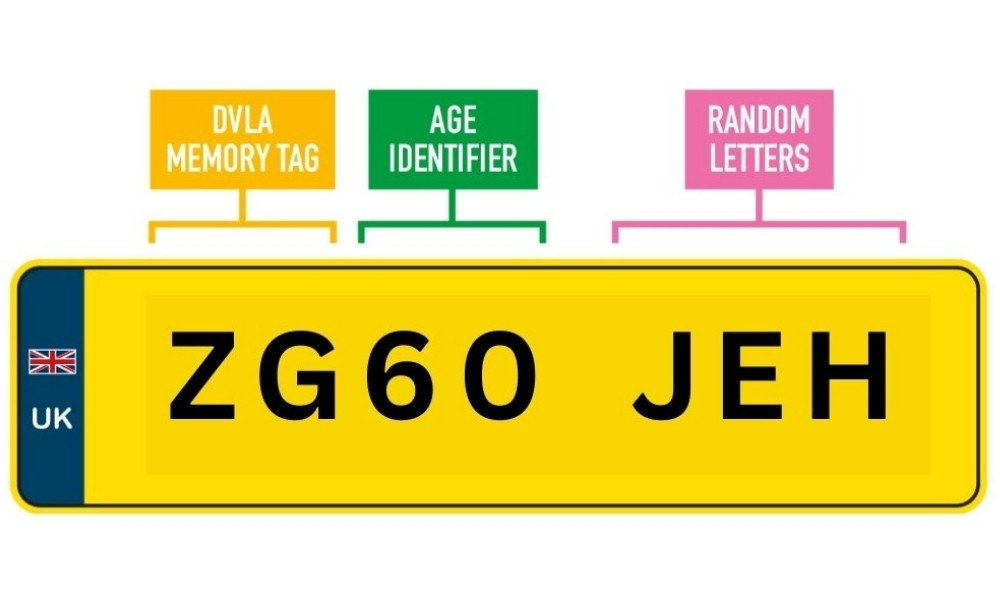
A current-format registration follows this pattern:
- First two letters: The DVLA local memory tag, which identifies the area connected with the original registration.
- Middle two numbers: The age identifier.
- Final three letters: Randomly allocated characters that help make the registration unique.
For example, in the plate AB23 CDE, “AB” is the local memory tag, “23” is the age identifier and “CDE” is the random sequence.
You can view a full list of number plate registration locations.
How the March and September identifiers work
The UK uses a bi-annual plate change, with new age identifiers released in March and September.
- Registrations issued from March to August use the last two digits of the year. A March 2023 vehicle receives a 23 identifier.
- Registrations issued from September to the following February add 50 to the year. A September 2023 vehicle receives a 73 identifier.
Rule of thumb: For September registrations, add 50 to the last two digits of the year.
Recent examples include:
| Registration Year | March to August Releases | September to February Releases |
| 2024 | 24 | 74 |
| 2025 | 25 | 75 |
| 2026 (Current) | 26 | 76 |
| 2027 (Upcoming) | 27 | 77 |
A 76 registration will only be assigned to a vehicle first registered as new on or after 1 September 2026.
For early years in this system, include the leading zero. A vehicle registered between March and August 2002 has an 02 identifier, rather than “2”.
Prefix (1983–2001) and Suffix (1963–1983) Registration Formats
Before the current format, Great Britain used single letters to show the registration period. The position of that letter tells you whether the plate follows the prefix or suffix system.
Prefix registrations
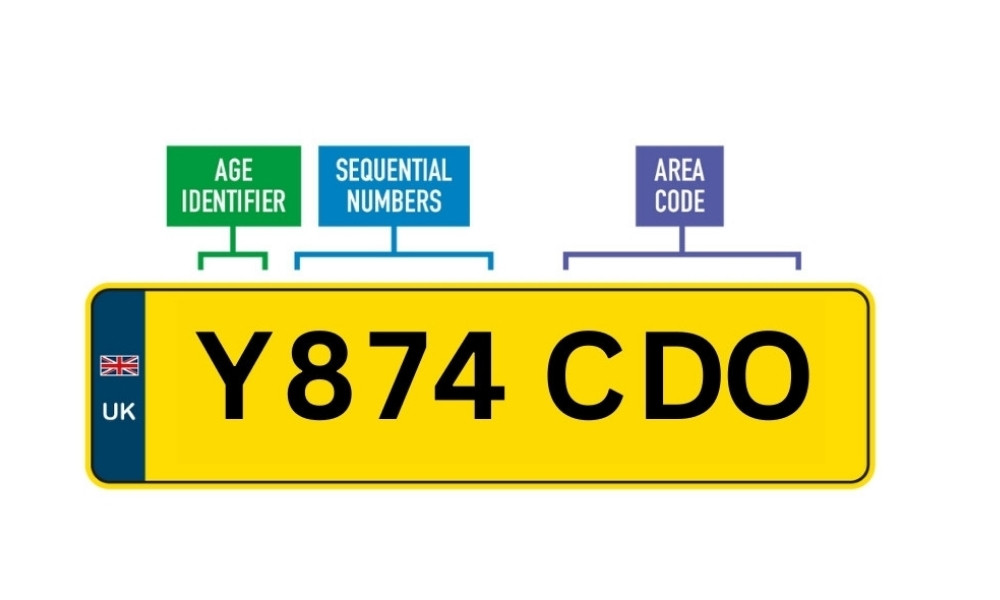
Prefix plates were issued from August 1983 to August 2001. The first letter identifies the registration period.
For example, A123 ABC uses “A” as its age letter. An A-prefix plate was issued for a vehicle registered between August 1983 and July 1984.
Suffix registrations
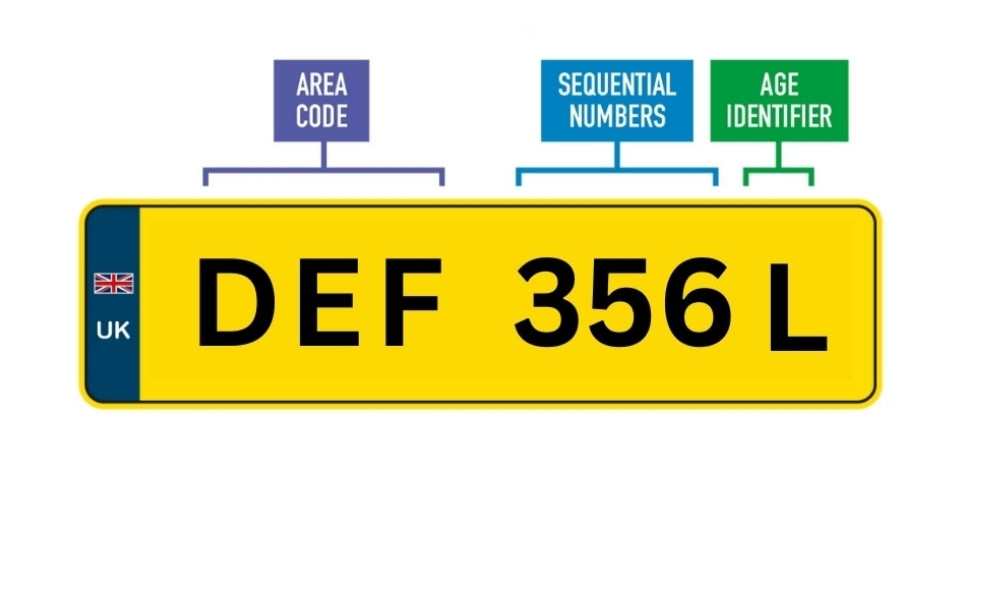
Suffix plates were issued from February 1963 to July 1983. Their age letter appears at the end.
For example, ABC 123A uses the final “A” as its age identifier. The letters and numbers before it do not show the vehicle’s manufacturing year.
A prefix or suffix letter shows the period when the vehicle was first registered for road use. It does not confirm when the vehicle was manufactured. Check the V5C Registration Certificate or manufacturer records for the exact build date.
Using the VIN to Determine Car Year of Manufacture
The Vehicle Identification Number (VIN) provides a permanent way to identify a vehicle when its current number plate does not reveal its age. It is especially useful for imported cars, vehicles carrying private registrations and cars whose original plates have been replaced.
Most modern vehicles use a 17-character VIN based on an international format. On many vehicles, the tenth VIN character indicates the model year. It should not automatically be treated as the exact factory build date, as coding practices can vary by manufacturer, market and vehicle age.
| VIN Checkpoint | Where to Find It | What to Verify |
| Visible dashboard VIN | At the base of the windscreen, usually on the driver’s side | Confirm that all 17 characters match the V5C and other vehicle records. Look for scratches, uneven characters or signs that the plate has been disturbed. |
| Door-frame VIN label | On the driver’s door frame, door jamb or B-pillar | Check that the VIN matches the dashboard display, chassis stamp and V5C. Look for peeling, replacement labels or inconsistent printing. |
| Stamped chassis VIN | Stamped into the chassis or structural bodywork | Inspect the surrounding metal for grinding, welding, fresh paint or re-stamping. The number should match every other VIN reference. |
| Engine-bay identification plate | Under the bonnet, often on the bulkhead, chassis plate or manufacturer label | Compare the VIN and available model details with the V5C and manufacturer records. |
Before buying, check that every VIN shown on the vehicle matches the VIN on the V5C Registration Certificate. Missing characters, mismatched numbers or signs of tampering around the stamped area should be investigated, as they may indicate a paperwork error, vehicle cloning or problems with the vehicle’s identity.
A VIN chart can help you interpret the tenth character as a general model-year reference.
| 10th VIN Character | Corresponding Model Year |
| F | 2015 |
| G | 2016 |
| H | 2017 |
| J | 2018 |
| K | 2019 |
| L | 2020 |
| M | 2021 |
| N | 2022 |
| P | 2023 |
| R | 2024 |
| S | 2025 |
| T | 2026 (Current Year) |
| V | 2027 (Upcoming) |
You can run a VIN check before buying the vehicle to review its recorded identity and history.
Number Plates That Hide a Vehicle’s True Age
Some registrations do not display a recognisable age identifier. A plate may be valid and correctly assigned while giving no clear indication of when the vehicle was manufactured or first registered.
Private and cherished number plates
A private or cherished number plate can replace the registration originally issued to the vehicle, so the plate may no longer reveal its age. The DVLA still keeps a record of the original registration, and the personalised plate must not make the vehicle appear newer than it is.
Before assigning, retaining or removing a private registration, make sure you have the latest V5C Registration Certificate and confirm its V5C issue date.
Northern Irish and dateless number plates
Northern Irish registrations do not use the same age identifiers as standard Great Britain plates. Their combinations of letters and numbers are dateless, so the plate alone cannot confirm the registration year.
Older dateless plates and cherished registrations also contain no age letter or two-digit year code. They can be assigned to vehicles of different ages, subject to DVLA transfer and eligibility requirements.
Use an online vehicle check and review the V5C Registration Certificate when you need to confirm the age and registered details of a vehicle carrying a dateless plate.
Q-plate registrations
The DVLA issues a Q-plate registration when a vehicle’s age or identity is in doubt. This can apply to certain kit-built, rebuilt, reconstructed or heavily modified vehicles where the evidence does not support an original or age-related registration.
⚠️ Buyer Caution: A Q registration means the DVLA could not confirm the vehicle’s original age or identity through the usual records. Before buying, examine the V5C Registration Certificate, VIN, relevant approval documents and any available build or reconstruction records. You should also confirm that suitable insurance is available.
Read the official Q registration guidance and examine the approval documents before purchasing one.
When the number plate does not show the vehicle’s true age:
- Enter the current registration into the age checker.
- Review the V5C Registration Certificate.
- Inspect and compare the VIN.
- Confirm the available information against DVLA records.
- Ask for build, import or approval documents where relevant.
Frequently Asked Questions
What’s the Difference Between a Car’s Registration Year and Manufacturing Year?
The Year of Manufacture shows when the vehicle was built, while the Date of First Registration shows when it was first registered for road use.
These dates may differ if the car remained unsold for several months, was kept in storage or was imported into the UK after being used elsewhere.
The V5C Registration Certificate and a vehicle check may show both dates. For imported vehicles, a manufacturer record or build label can help confirm the original factory date.
Can I Use a New Registration Plate on an Older Vehicle in the UK?
No. You cannot assign an age-related registration that makes a vehicle appear newer than it is.
For example, a 23 registration cannot be assigned to a car first registered in 2015. An older or dateless plate may be allowed, but the vehicle and registration must still meet the DVLA’s assignment rules.
To qualify, the vehicle must usually be registered with the DVLA, able to move under its own power and available for inspection if requested. Vehicles with Q plates cannot be assigned a private registration.
Check the official personalised registration rules before starting a transfer.
Does My Car’s Exact Age Impact Its Resale Value?
Yes. Age is a major part of vehicle depreciation because buyers usually expect an older car to have more wear, fewer modern features and a shorter remaining service life.
Age does not determine the price on its own. Mileage, condition, maintenance records, number of previous owners, accident history and demand for the model may have an equal or greater effect.
The release of new registration plates in March and September can make cars with the previous age identifier seem older, even when they were registered only a few months earlier.
A low-mileage older car with a complete service record may sell for more than a newer car with poor maintenance or hidden damage. A full history check can help buyers assess whether the asking price reflects the vehicle’s true age, recorded history and known risks. A physical inspection is still needed to confirm its current condition.