Bikes
Bikes Vans
Vans Motorhomes
According to the latest Office for National Statistics (ONS) crime bulletin, there were over 617,000 vehicle-related theft incidents in the last year, highlighting the critical need for a theft check before purchasing a used car. Our basic check is 100% free and searches the Police National Computer (PNC) via our official data partners to help you check if a car is stolen before you buy.
If you are buying privately, a quick car theft check can help you avoid a very expensive mistake. If a vehicle is recorded as stolen, you could lose both the car and the money you paid for it.
We give you a clear result in seconds, so you can decide whether to walk away, ask more questions, or move on to a VIN history check for extra peace of mind.
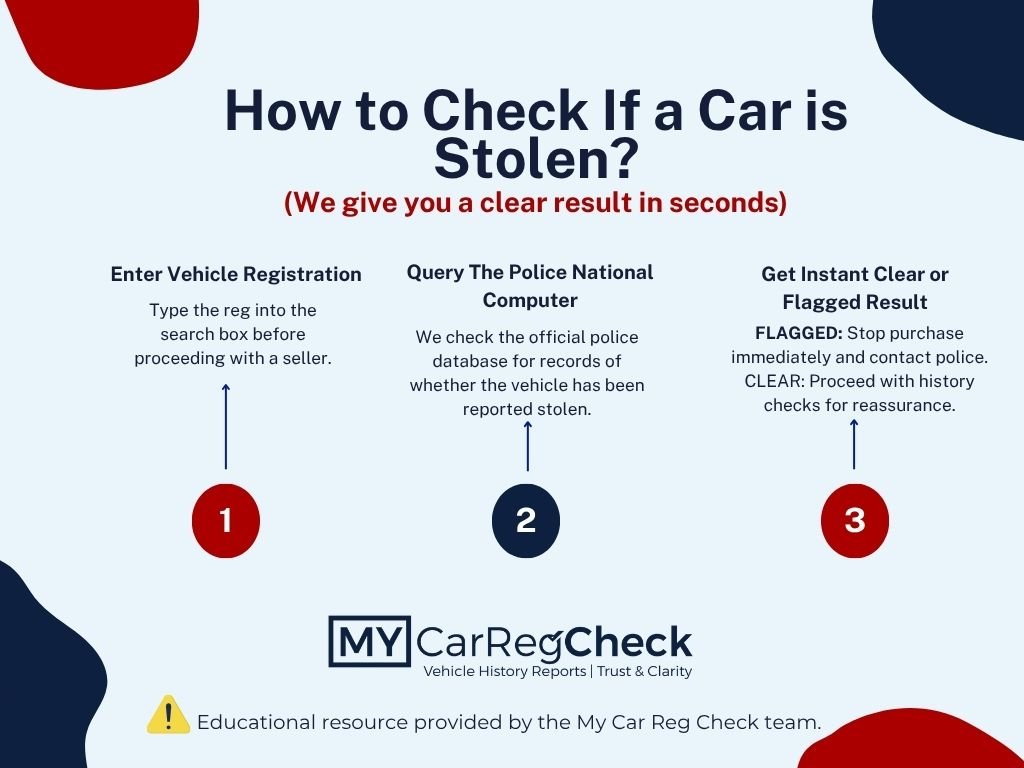
How to Check If a Car is Stolen?
Our stolen car checker keeps it simple. You can run a stolen car check in seconds using the registration number of any vehicle registered in Great Britain.
Enter the vehicle registration.
Type the reg into the search box. This is the quickest way to start a theft-status check before you go any further with a seller.
We query the Police National Computer (PNC).
As soon as you search, we check the police database to see whether the vehicle has been reported stolen. That gives you a fast, reliable answer based on official stolen vehicle records.
Get an instant, clear or flagged result.
You will see straight away whether the car comes back clear or flagged. If it is flagged, stop the purchase immediately and contact the police for guidance. If it is clear, you can decide whether to move on to a write-off check or a wider car history check for extra reassurance.
What Data is Included in Your Free Stolen Vehicle Report?
Our stolen vehicle check free report is focused on one job: helping you see quickly whether the vehicle has an active stolen record before you buy.
In your free result, you will see:
- A clear result showing whether the vehicle is recorded as stolen or not
This gives you the key theft-status data you need at the point of decision. For example, if a seller is pushing for a quick sale, the free report helps you spot an immediate red flag before you hand over any money.
The free report is designed to confirm the stolen status. It does not replace a full number plate lookup, because checking the DVLA vehicle record can still reveal important registration details. The free check focuses on whether the vehicle is recorded as stolen, while the paid upgrade gives you a broader vehicle history report.
If you want a wider picture of the car, the paid upgrade can help you look into other risks, such as outstanding finance, MOT history, and and an insurance status check. That is useful when the vehicle is not recorded as stolen, but you still want to know whether there are other issues in its history.
The Hidden Risks: What Happens If You Buy a Stolen Car?
Purchasing a stolen vehicle can result in serious legal and financial consequences, even if you had no idea anything was wrong at the time of sale. In most cases, the police can take the vehicle and return it to its rightful owner, but you may be left without both the car and the money you paid.
This often happens faster than buyers expect. After a theft is reported and the vehicle is marked as stolen on the Police National Computer, ANPR cameras can flag it if it is driven on the road. That alert can lead police straight to the vehicle, and once they confirm it is linked to vehicle theft, they have the legal right to seize it.
The hardest part is that good faith does not automatically protect you. You may have paid in full, received keys, and believed the sale was genuine, but that does not give you legal ownership of stolen property.
In practical terms, the risk looks like this:
- The police can seize the car without paying you compensation
- You may lose the full amount you paid
- You could face a long dispute with the seller to try to recover your money
- You may be left without transport and facing a difficult process to prove what happened and recover your money.
That is why checking before you buy matters so much. A quick check is far easier than dealing with the fallout after the car has already been taken from you.
What Should You Do If a Vehicle Is Flagged as Stolen?
If your stolen car check free result shows that a vehicle has been flagged as stolen, do not go ahead with the purchase. However convincing the seller sounds, this is the point to stop, step back, and protect yourself.
Here is the safest way to handle it:
- Do not pay a deposit or transfer any money
- Do not agree to “sort it out later” with the seller
- Do not try to drive the car away
- Do not confront the seller if the situation feels suspicious or unsafe
- Call the police on 101 and report what you have found
When you speak to the police, have the registration number ready, along with the advert details, seller contact information, and the location of the vehicle if you know it. That helps the report move faster and gives you a record of acting responsibly.
If you have already bought the car, the advice is the same: contact the police on 101 as soon as possible. Do not try to return the vehicle to the seller yourself, and avoid using it until you have been told what to do next.
A simple rule to follow is this: if a car is flagged as stolen, treat it as a police matter, not a negotiation with the seller.
Why Trust My Car Reg Check for Your Vehicle Data?
Trust matters when you are checking a used car, because the result can affect whether you buy, walk away, or dig deeper. At My Car Reg Check, our job is simple: help protect UK car buyers with clear, reliable vehicle data before money changes hands.
Our data comes from established industry and official sources, including DVLA, the Police National Computer (PNC), insurer databases such as MIAFTR, and other trusted vehicle data sources.
That means we are not relying on a seller’s description or a quick visual check. We check the relevant records that help uncover theft, write-off, identity, and registration problems before you buy.
Here is what that means in practice:
- DVLA data helps verify core vehicle identity and registration details
- PNC data supports stolen vehicle status checks
- MIAFTR data helps identify insurance total-loss and write-off records
- Our paid upgrades include a £30k Data Guarantee for extra peace of mind
If a car looks fine in person but the records tell a different story, that is exactly the kind of risk a proper history check is there to catch. This is why many buyers start with a free vehicle check, then upgrade when they want a fuller picture before committing.
We also believe trust should be visible, not just claimed. You can read reviews from our past customers on Trustpilot.
Frequently Asked Questions (Stolen Car Checks)
Are stolen car checks completely free?
Yes. The stolen status part of the check is free.
That means you can search the registration and see whether the vehicle is currently flagged as stolen. If you want more than theft data, the premium upgrade is £7.99 and adds the wider history checks buyers usually want before paying for a used vehicle.
The premium upgrade covers checks such as:
- Outstanding finance
- Insurance write-off history
- Mileage records
- Other key background checks beyond stolen status
So, in simple terms, the stolen marker check is free. The deeper history report is the paid upgrade.
Does this check cover motorbikes and commercial vans?
Yes. This check is not limited to cars.
If the vehicle is UK-registered, the search can apply to other eligible vehicle types too, including motorbikes and commercial vans. That is useful if you are buying outside the standard used car market but still want to know whether the vehicle has been reported stolen before you commit.
In other words, the same theft-status check supports a wide range of vehicles checked through the same registration-based search process.
How often is the stolen vehicle database updated?
The check reflects the stolen status held on the police database at the time you search.
In practice, that means the result is designed to give you an up-to-date view of whether a vehicle is currently recorded as stolen when you run the check. Police records can change as cases are added, updated, or resolved, which is why it is always best to search as close as possible to the point of purchase.
If you checked a vehicle a few days ago and are about to pay for it now, run the check again. A fresh search is the safest approach.
Can a stolen car bypass checks if its registration is altered?
While some may attempt a number plate change, our system queries official police and insurer databases, so the stolen status will still be detected even if the plate has been switched.