Bikes
Bikes Vans
Vans Motorhomes
Salvage History Check & Auction Damage Report
For just £7.99, our salvage history check helps you see what a standard check can miss before you commit to buying a used car. You can uncover salvage auction records, pre-repair damage photos, unrecorded accident history, and insurance write-off status using the car’s registration.
If you want a salvage check with pictures, this report is built for that exact job. It helps you spot whether a car has been accident-damaged, passed through a salvage auction, or carries serious warning signs that could affect safety, value, insurance, and resale.
This is more than a basic car salvage check. We cross-check auction damage records with key vehicle data so you can check accident history on car listings more confidently and make an informed decision before you buy a car.
Your report can help reveal:
- Auction photos showing the vehicle before repairs
- Write-off status and recorded damage history
- Signs of hidden or unrecorded salvage activity
- Key red flags that may not appear in standard vehicle history checks
- A clearer accident history picture before you pay for the vehicle
That matters because a repaired car can look fine in an online car advert, while older auction images may show structural damage, panel deformation, flood exposure, or airbag deployment. Seeing the vehicle before repair gives you context that a plain-text check often cannot.
If you are comparing two similar cars, a salvage record can completely change which one offers better value. A detailed vehicle history report helps you judge whether the price properly reflects the car’s past, while also helping you ask better questions, verify repairs, and decide whether the vehicle is likely to be suitable to return to the road.
Enter the registration now to run your vehicle salvage check and see whether the car has a hidden salvage history.
What Does Our Salvage Check Reveal?
A vehicle salvage check is designed to show the facts you need before you commit to a car with a questionable past. Here is what our report can reveal:
Pre-repair auction photos
High-resolution images from the original salvage listing, so you can see the vehicle’s condition before any repair work was done. This is often the quickest way to judge whether a salvage vehicle had light panel damage or something far more serious.
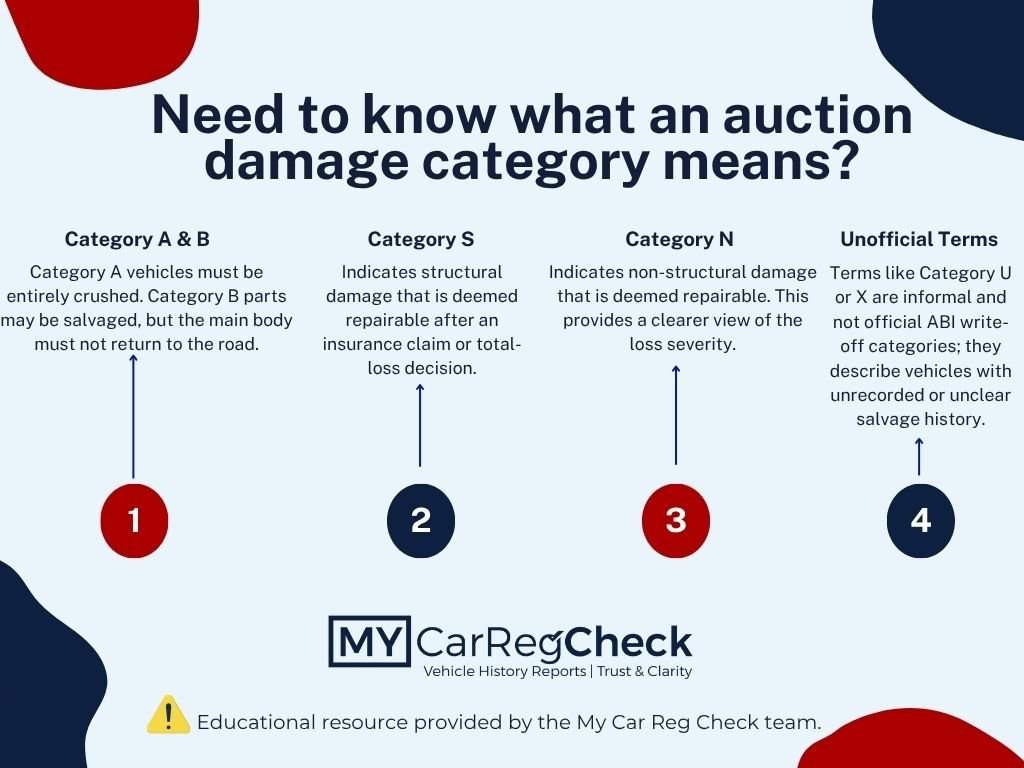
Damage category: A, B, S or N
The auction-assigned category shown against the vehicle record:
- Category A – must be crushed
- Category B – parts may be salvaged, but the main body of the vehicle must not go back on the road
- Category S – structural damage, repairable
- Category N – non-structural damage, repairable
This gives you a clearer view of how severe the loss was after an insurance claim or total-loss decision.
- Important: Most buyers only know the official write-off categories A, B, S and N. But in salvage auction data, you may also see informal terms such as Category U or Category X. These are not official ABI insurance write-off categories. They are sometimes used to describe vehicles with unrecorded or unclear salvage history, including cases where no insurer total-loss record appears on standard databases.
Auction sale date
The date the car appeared at a UK salvage auction. This helps you place the damage in context and spot cases where a car was repaired and resold very quickly.
Salvage site location
The location of the auction or salvage yard where the vehicle was listed. This adds useful context to the car’s timeline and supports a more complete ownership picture.
Mileage verification
The mileage recorded when the vehicle entered salvage. You can compare this against later records to build a clearer mileage history and spot suspicious jumps, rollbacks, or other inconsistencies.
VIN match verification
A check against auction-linked VIN data to confirm the vehicle identity matches the registration. For a closer look at vehicle identity, you can also run a VIN check.
Engine number consistency
Where available, engine details can be compared against auction records to help flag possible engine swaps or identity concerns.
Damage summary
A short description of the reported or visible damage at the time of auction, giving you more than just a category label.
Vehicle identity clues from the number plate
This helps link the current vehicle to the correct salvage and auction records, reducing the risk of mismatched history.
This level of detail helps you spot problems that a seller may not mention, including hidden rebuilds, poor-quality repairs, or a car that is worth less than its appearance suggests.
Insurance Write-Off vs. Unrecorded Salvage: Why You Need This Check
A write-off and a salvage record are not the same thing, and that difference matters when you are deciding whether a car is safe, fairly priced, and worth buying.
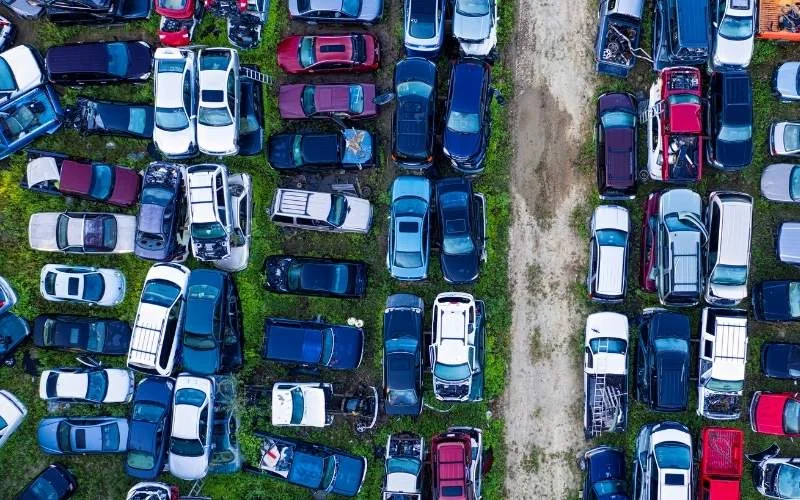
An insurance write-off is an official total-loss decision. It is usually recorded through insurer-led systems such as the MIAFTR database and may appear in a standard vehicle history check as Category A, B, S or N.
Unrecorded salvage is different. These are vehicles that appear in salvage auction records without a matching insurer total-loss trail. That can happen when a car is privately sold after damage, stolen and recovered, repossessed, or disposed of outside a normal insurance claim process.
That is why a basic check can miss serious past damage.
Our salvage check goes beyond insurer-recorded write-offs by searching auction history as well as core vehicle records. This helps uncover hidden listings from damaged cars that may have been repaired and put back on sale with little or no mention of their past.
In practical terms, the difference looks like this:
Insurance write-off
Officially recorded total loss, usually visible through mainstream write-off data.
Unrecorded salvage
Damaged vehicle found in auction records, but not clearly recorded as an insurer write-off.
Why it matters
A car can look clean in an advert, but still have a hidden rebuild history, structural repair work, flood damage, or theft-related damage in its past.
A common example is a car that shows no obvious write-off marker, yet auction photos reveal front-end impact damage, deployed airbags, or heavy rear structural damage before repair. To a buyer viewing the car months later, that history may be impossible to spot from paintwork alone.
This is where a dedicated salvage check adds real value. It can help you see whether the vehicle has been through a salvage auction, when that happened, how serious the damage looked, and whether the timeline makes sense alongside mileage, identity, and ownership clues.
It is also useful for cars linked to theft recovery. Some stolen vehicles are later sold through salvage channels after damage or partial stripping, even when the later resale advert gives very little away.
A free salvage history check can be a useful first step, but buyers should understand its limits. If you are spending thousands on a used car, you need enough detail to judge repair quality, ask for invoices, and decide whether to renegotiate or walk away.
This matters not just for safety, but for value. A secretly rebuilt car can carry long-term issues with alignment, corrosion protection, warning systems, insurance premiums, and resale price, even if it now looks presentable.
See The Damage: Salvage Auction Photos Included
A salvage check with pictures gives you something a text-only report cannot: direct visual evidence of what the car looked like before repair.
When auction photos from sources such as Copart or Synetiq are available, you can see whether the damage was limited to panels and bumpers or whether the car suffered a heavier impact that may have affected the structure, airbags, suspension, or alignment.
That matters because a car can look immaculate at the point of sale while hiding serious earlier damage. A seller may describe it as “light damage repaired”, but pre-repair images can show crushed rear quarters, major front-end impact, flood exposure, or stripped parts.
For anyone trying to check accident history on car records properly, these images add real context. They help you decide whether repairs look credible, whether more evidence is needed, or whether it is smarter to walk away.
Understanding UK Salvage Categories
Use the category as a starting point, not the whole story. It tells you how the vehicle was assessed after damage, but it does not confirm how well it was repaired later.
Category A – Scrap only
The vehicle is so badly damaged that it must be crushed in full. No parts should be reused.
- Buyer view: Walk away. This is not a car to consider for road use.
Category B – Break for parts
The bodyshell must be crushed, but some parts may be removed and reused.
- Buyer view: Walk away. The shell itself must not return to the road.
Category S – Repairable structural damage
The vehicle has suffered damage to structural areas such as the chassis, crumple zones, or major body structure, but it can legally be repaired. Checking a Cat S record can help you understand that history in more detail before you buy.
- Buyer view: Investigate carefully. Ask for repair invoices, inspection evidence, and clear photos of the work carried out.
Category N – Repairable non-structural damage
The vehicle has not been classed as structurally damaged, but it may still have needed significant repairs to panels, suspension, steering, electronics, or safety systems.
- Buyer view: Do not assume “minor.” Check repair quality just as carefully as you would with Cat S. If you are looking at this specific type of write-off, a category N car check can help you investigate further.
For a buyer, the simple rule is:
- Cat A or B: do not proceed
- Cat S or N: only proceed if the history, repair evidence, and price all make sense
Why Choose My Car Reg Check?
If you are about to spend thousands on a used car, you need more than a basic lookup. We bring together trusted UK vehicle data, official write-off records, and leading auction-house history so you can check the car properly before you commit.
Trusted UK data sources
We check key records from sources such as the DVLA, Police National Computer (PNC), MIAFTR, and major salvage auction data providers.
Auction history with real-world context
We do not just tell you that a vehicle has a marker. Where available, we help you see when it appeared at auction, what damage was recorded, and whether photos exist to support the history.
Built for real buying decisions
If a seller says the damage was “only cosmetic”, you can compare that claim against the actual report and decide whether to ask for repair invoices, renegotiate, or walk away.
Instant delivery
Your report is delivered straight away, so you can make a decision while the car is still in front of you.
UK-based support
Need help with a result? Our team is based in the UK.
- Clyde Offices, 2nd Floor, 48 West George Street, Glasgow, G2 1BP
Buyers trust our checks, and our Google Business Profile and Trustpilot reviews are proof of that.
Protection you can rely on
Our £30k data guarantee is there to give you extra confidence when you are making an important purchase.
FAQs About Salvage History
Can I get a salvage history check for free?
You can check some basics for free, but not the full salvage picture. The DVLA’s free vehicle enquiry service shows things like tax, SORN, MOT expiry, first registration date and last V5C issue date, and the free MOT history service adds past test results and mileage.
That is useful for spotting early warning signs, but it does not usually show private salvage-auction listings or historical damage photos. Those records come from paid industry datasets, which is why a small fee applies for a proper salvage report.
Can a salvaged car be driven and insured?
Sometimes, yes. Category S and Category N vehicles can go back on the road if they have been repaired properly and are roadworthy, but Category A and Category B vehicles are not road-return options.
Insurance can also be harder or more expensive. Some insurers may charge higher premiums for previously written-off vehicles or refuse cover altogether, so it is worth checking with your insurer before you buy.
Does this report verify the VIN and engine number?
Yes. The report includes a basic vehicle identity check, helping you compare the VIN and engine details against the V5C and linked records. That matters because buyers are advised to make sure the VIN and engine number match the log book before purchase, which helps reduce the risk of cloning or hidden identity problems.