What Is an MOT for Electric Cars?
The MOT, which stands for the Ministry of Transport test, has changed over time as cars have changed. It now covers modern vehicles, including electric and hybrid models, so drivers can be confident that MOT on electric cars follows the same UK standards as any other vehicle.
For an electric car, the aim is still simple and practical. It checks that your car is safe and roadworthy for UK roads, and once your EV is over three years old, having a valid MOT is a legal requirement.
If you are not sure when your test is due, you can use our free mot check to confirm the date before you book. In this guide, we will explain what the MOT involves for EVs, what gets checked, and how to get your car ready.
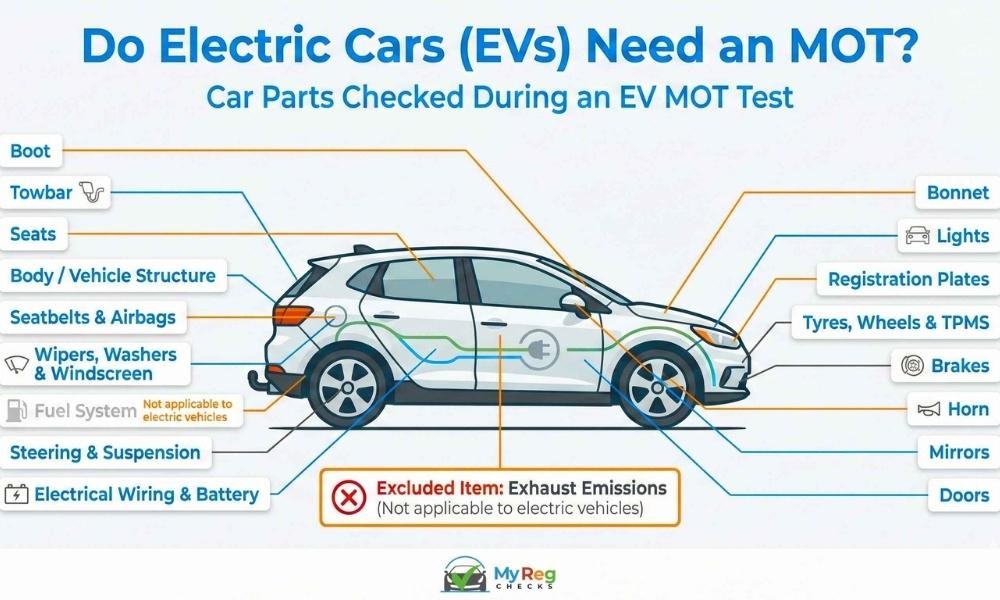
(Infographic)

When and How Often Do Electric Cars Need an MOT?
In the UK, electric vehicles EVs follow the same MOT timing rules as petrol and diesel cars. Once your electric car is more than three years old, you must get an MOT electric car test every year to keep it road-legal.
It is risky to drive without a valid MOT certificate. Even if your car seems to drive normally and has no obvious faults, you can still face police action, a fine, and penalty points if you drive without a valid MOT.
You can book the next test up to one month before your current certificate expires. Booking early allows you to deal with any issues that may arise, as well as avoid a period during which your vehicle is no longer legal to drive.
What Is Checked During an Electric Car MOT Test?
During an EV MOT, the tester checks the same key safety items that every car needs on UK roads. They inspect the brakes, steering, suspension, lights, and tyres to make sure the car is safe and roadworthy.
The braking system is checked for condition and performance, including brake pads and discs. They also check visibility items such as the windscreen, washer jets, and windscreen wipers. These components must function properly so that you can see the road clearly in rain, fog, and low light.
Electric cars also get receive visual safety checks of the parts that carry and control electrical power. However, battery health (capacity or degradation) is not measured as part of the MOT. Instead, the tester checks that the high-voltage battery and related components (high voltage components and high voltage cabling) are securely mounted, not visibly damaged, and show no signs of unsafe exposure.
The tester also inspects the drive system, which includes the electric motor. This helps to confirm that there are no obvious flaws or safety hazards in the parts that move the car.
Safety and Roadworthiness Checks That Still Apply to EVs
The core safety checks for electric cars are the same as for petrol or diesel cars. The goal is to confirm the vehicle is safe, roadworthy, and meets the legal standard for driving on UK roads.
The tester will evaluate the brakes' condition and performance. They will also inspect all of the exterior lights and indicators, as well as the steering and suspension, to ensure that everything works properly.
Tyres must have adequate tread depth and be free of damage, and seatbelts must lock and retract correctly. Visibility is also checked through the condition of the windscreen, as is the basic safety of the electrical system, which includes the battery and high-voltage cables.
To confirm your MOT due date or see previous results, use our car reg checker to view your MOT status and history. This helps you stay up to date and avoid booking at the last minute.
Electric Car MOT vs Petrol and Diesel MOT: Key Differences
In the UK, an electric car MOT follows almost the same structure as the test for a petrol or diesel car. It remains focused on roadworthiness and safety, so the majority of the checks are familiar.
The main difference comes down to the engine type. Petrol and diesel cars have an exhaust system, so they can be assessed through an emissions test, but an electric car does not need that part of the check.
Instead, the MOT pays closer attention to EV-specific features. The MOT checks battery mounting and visible safety to ensure there are no obvious hazards, such as insecure fixings or damaged high-voltage parts.
How Much Does an Electric Car MOT Cost in the UK?
In the UK, an electric car MOT costs the same as any standard car MOT. The legal maximum fee for a car test is £54.85, and you do not pay VAT on the MOT test fee.
Many garages charge less than the maximum, so it is worth shopping around. You may see lower prices online or at local independent test centres.
The MOT price covers the inspection only. If the tester finds faults that need fixing, you will have to pay extra for any work and parts needed to get the car to a pass standard.
If your car requires repairs, some places may provide a free or discounted retest in certain circumstances, depending on how quickly the work is completed and where the work is performed. It is a good idea to enquire about the retest rules when booking.
How to Book and Get an MOT for Your Electric Car
Booking an MOT for an electric car works the same way as it does for petrol and diesel cars. You choose an MOT test centre, book an appointment, and take the car in on the day.
Before you go over, make sure the car is running normally and that nothing obvious requires attention. It also helps to arrive with a full charge so that the tester can complete the tests without delay.
Common Reasons Why Electric Cars Fail Their MOT
Electric cars can fail an MOT for many of the same reasons as other vehicles. Most failures are linked to simple safety faults that are easy to miss in day-to-day driving.
Common EV MOT failure points include:
- Lights, indicators, and reflectors that do not work properly
- Worn or damaged suspension parts
- Issues with brakes and tyres, such as low tread or uneven wear
- Poor visibility, including chips or cracks in the windscreen
You can reduce the risk of failure by performing a few quick checks prior to your appointment. If you want to confirm key details about your model first, our car spec check can help you match the right parts and specs.
On the day of testing, make sure the car is charged and ready. This allows the garage to complete the checks efficiently and without delay.
What Happens If Your Electric Car Fails Its MOT?
It is not safe to drive your electric car on the road if it fails its MOT. The car needs to be fixed so that it is safe to drive again without breaking the law.
A failed test can be stressful, but many problems that cause the failure are simple and avoidable. Doing a few checks before your appointment can lower the chance of a fail.
Here are practical checks you can do before the test:
- Test every light, including indicators, brake lights, hazard lights, headlights, and number plate lights.
- Check that doors close and lock properly, and look for leaks around doors and windows.
- Pull each seatbelt to make sure it locks and retracts, and check child seats if you use them.
- Check tyre tread and condition, and adjust tyre pressure to the proper level.
Keeping up with basic maintenance makes your MOT run more smoothly. It also promotes safe driving for you and everyone else on the road.
Do Electric Cars Have Any MOT Advantages Compared to Fuel Cars?
Electric cars can have a few practical advantages at MOT. They have fewer moving parts than many petrol and diesel vehicles, resulting in less wear on engine, exhaust, and gearbox components.
This can mean fewer or no faults in places that commonly cause problems on fuel cars, especially around emissions and exhaust hardware. That said, an EV can still fail for the usual reasons, such as tyres, brakes, lights, suspension, or windscreen damage.
Regular maintenance still matters with an electric car. Oil changes and exhaust work are unnecessary, but battery condition and electrical safety are critical for dependable driving and a smooth MOT.
Does Owning an Electric Car Affect Insurance Costs?
Owning an electric car can affect your insurance costs, but there is no single rule that applies to all drivers in the UK. Your premium is still determined by the vehicle you select and your usual rating factors, such as age, postcode, mileage, and claims history.
EVs can be more expensive to insure because they often have a higher value, and repairs can be more expensive, particularly when specialist work or battery-related parts are required.
FAQs
How often do electric cars need an MOT?
Electric cars need an MOT every year once they are more than three years old. You can book the test up to one month before the current certificate runs out.
Do electric cars usually pass the MOT without issues?
Many electric cars pass without major issues, but they can still fail due to common faults. The usual problems are worn tyres, brake issues, broken lights, suspension faults, or windscreen damage.
Does an electric car need an MOT?
Do electric cars need MOTs? Yes. In the UK, an electric car needs an MOT once it is more than three years old, and it must be renewed every year after that.