Moving a personalised number plate between vehicles is a standard, legal DVLA process. If you want to transfer a number plate to another car, the key is to get the order right from the start. Most delays happen because the wrong vehicle details are entered, the keeper’s information does not match, or the application begins before the basic checks are complete.
In this guide, we will show you how to transfer a private plate clearly, whether you plan to apply online through the DVLA website or use the postal route. We will focus on the practical points that matter most, including what to prepare, what can slow things down, and where people commonly make mistakes.
This is especially useful if you are changing cars, keeping a registration for later, or dealing with a plate before selling a vehicle. Taking the right steps from the start helps the registered keeper avoid delays, rejected applications, and extra contact with the DVLA.
What Do You Need to Transfer a Number Plate?
Before you start the application, gather everything in one place. That makes the transfer process much smoother and reduces the chance of entering the wrong details halfway through.
You will usually need:
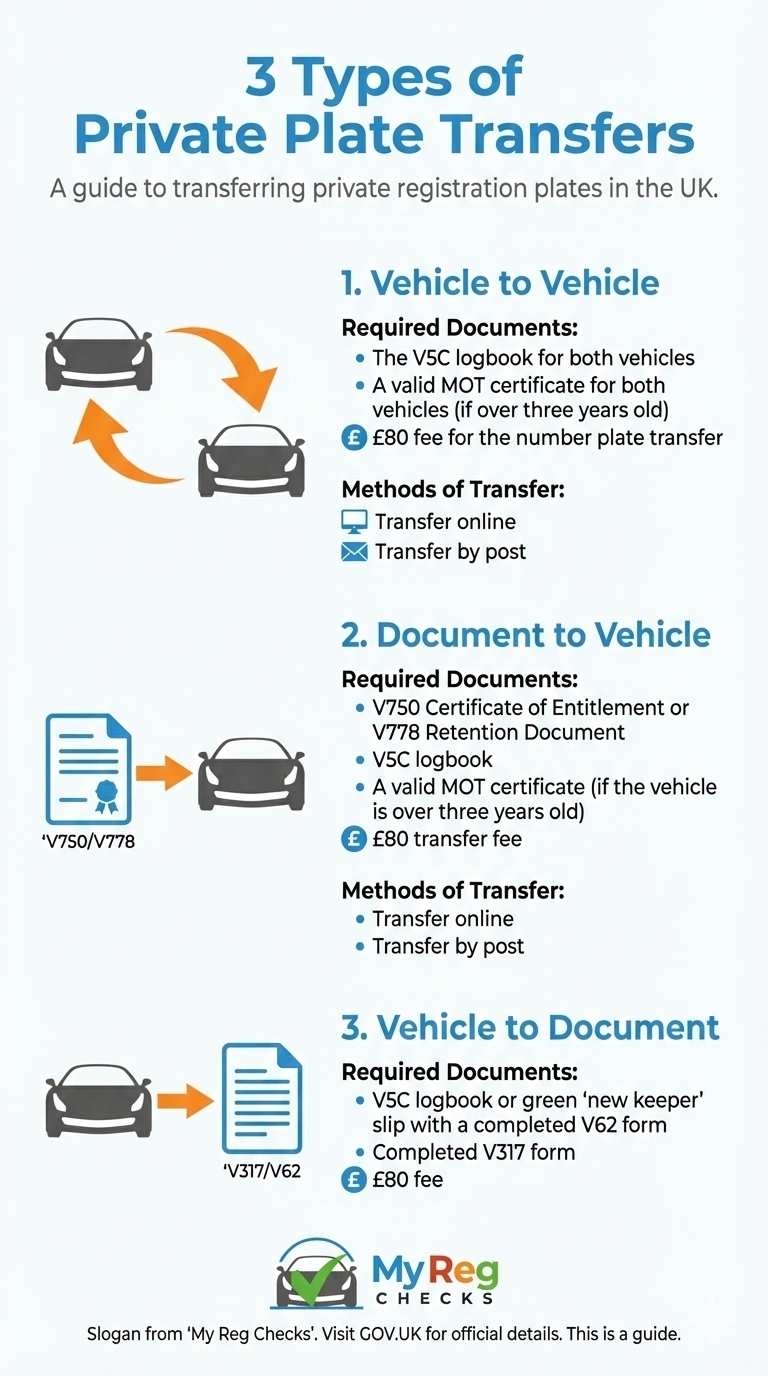
- The V5C logbook for both vehicles if you are moving the registration from one car to another
- You will need the 11-digit document reference number from the most recently issued V5C logbook. Make sure you use the latest V5C, especially if there has been a recent keeper or address change, because outdated document details can prevent the application from going through.
- A valid MOT certificate if the vehicle needs one
- The keeper’s postcode and matching vehicle details for both cars
- The £80 transfer fee, ready to pay if you are taking the registration off a vehicle
- The registration you want to move, which has already been checked carefully, so the letters and numbers are correct
- If the plate is not currently on a car, the relevant document, instead of the donor car’s V5C:
- V778 retention document, or
- V750 certificate of entitlement
A practical tip: place both logbooks side by side before you begin. Most avoidable mistakes happen when people mix up document reference numbers, registration details, or the details of the receiving vehicle.
DVLA Eligibility Rules for Registration Transfers
Before you start, check that the vehicle you are taking the number off meets DVLA’s eligibility rules, and make sure the receiving vehicle is also eligible to have a private number assigned. These requirements are strict, so it is worth confirming them first rather than finding out midway through the application that one vehicle does not qualify.
- Both vehicles must be registered with the DVLA in the UK.
- Each vehicle must be able to move under its own power.
- Each vehicle must be the type that needs an MOT or HGV test certificate.
- Each vehicle must be available if the DVLA asks to inspect it.
- The vehicle you are taking the number off must have been taxed or had SORN in place continuously for the past 5 years.
- Be currently taxed or have an active SORN (Note: If a vehicle has been on a SORN for more than 5 years, it must be fully taxed and have a valid MOT before the DVLA will allow the plate to be transferred).
There is one rule that catches people out more than any other: you cannot use private registration plates or personalised plates to make a vehicle appear newer than it really is. For example, a plate with a newer age identifier cannot be assigned to an older car. Q and QNI registrations cannot be transferred or assigned to another vehicle.
The plate can be older than the car, but it cannot make the car look younger. That is why checking age-related registration details early can save time and avoid a rejected application.
Transferring a Private Plate Online
Transferring a private plate online is usually the quickest option. If neither vehicle needs a DVLA inspection, the number can be removed and assigned straight away. Current GOV.UK guidance shows the online services are available Monday to Friday from 7 am to 9 pm, and weekends from 7 am to 8 pm.
To transfer a number plate from one car to another online, follow these steps:
- Start with the donor vehicle and use the GOV.UK service to take the private number off. Once the application is approved online, the private plate is removed from the vehicle. If your application is successful, the vehicle’s original registration number is usually reassigned automatically.
- Make a note of the online reference number you receive after removal. You will need it for the next step.
- Then go to the GOV.UK service to assign the number to the receiving vehicle. If that vehicle does not need an inspection, the assignment is also immediate.
- Once approved, follow the on-screen confirmation and fit the correct vehicle registration numbers to both cars before driving them. That means putting the original plates back on the donor vehicle and the private plates on the receiving vehicle.
A simple tip: double-check every character before submitting. Most online mistakes are small errors in registration details, not major paperwork problems.
Transferring a Private Plate by Post (V317 Form)
If the online service is not available, use form V317. This postal route can be the best option when the receiving vehicle’s online details are not yet available.
Fill in the V317 carefully using the guidance notes on the form. Include the original V5C documents for the vehicles involved, complete any keeper details where needed, and add the £80 payment by cheque, banker’s draft, or postal order, as shown in the form checklist. If you also need to tax either vehicle, include the extra tax form and MOT certificate where required.
Post everything to the address shown on the form. Applying by post usually takes longer than using the online service, so allow around 2 to 4 weeks overall. DVLA also says new documents can take up to 4 weeks to arrive after a postal application. A simple way to avoid delays is to check every registration character twice before sending, especially if you are using this route to transfer plate details after buying another car.
Retaining a Plate vs Direct Transfer
The choice comes down to timing. If you already have the next car ready, you can move the registration straight across. If you are selling your current car first and have not bought the replacement yet, the safer option is to remove it from the vehicle and hold it on a V778 retention document until you are ready to use it again.
A direct transfer is best when you are moving plates from one vehicle to another without a gap in between. In DVLA terms, that means taking the number off Car A and assigning it to Car B as part of the same overall move. This is usually the simplest route when both vehicles are already sorted and eligible.
Retention is different. It is the better fit when you are selling now but want to keep the registration for later. The plate comes off the current car, the DVLA issues a V778 retention document, and you keep the right to use it until you assign it to another vehicle. This can be especially helpful if you are between cars and do not want to risk losing the registration during a sale.
Important: Check the Vehicle History Before Assigning a Plate
A registration change does not reset a car’s past. That matters when you are buying a vehicle to put your plate on, or looking at one that has recently had a private registration removed.
Before you assign your plate, check for the issues that matter most:
- Outstanding finance
- Mileage discrepancies
- Insurance write-off status
- Previous plate changes linked to the same vehicle
This is where a full Number Plate Check becomes useful. If the car has worn different registration numbers over time, you want to know that history before you make it yours. A small check now can help you avoid attaching your private plate to a car with hidden problems.
Because a private plate transfer often happens during a change of ownership, checking the vehicle’s background is an important step. Running a detailed history check allows you to cross-reference the DVLA data, check for mileage discrepancies, and confirm structural safety markers before you officially register your plate to the vehicle.
Do I Need to Tell My Insurer If I Change My Number Plate?
Yes. Once the registration changes, you need to tell your insurer straight away. You must update your insurance details when you get a new registration number; the registration on your policy should match the number plate on the vehicle.
Do not drive the car until your insurer has updated the policy and confirmed the new registration is on their records. Insurance checks are tied to registration details. If the physical plates on your vehicle do not match the records held on the Motor Insurance Database (MID), the car may appear uninsured on police ANPR (Automatic Number Plate Recognition) systems. This can result in an immediate roadside stop, vehicle impoundment, and penalty points—even if you have paid for a policy.
Incorrect policy details can also impact how a claim is dealt with, and failing to report a plate change can put your cover at risk. It’s a quick step, but it’s one of the most important parts of the whole process.
Frequently Asked Questions
How much does it cost to transfer a private number plate?
The usual DVLA fee is £80 when you take a private number off a vehicle, whether you are moving it directly to another car or putting it on retention first. That covers the main cost of transferring a number plate in most real-world cases. If you are assigning a number from a valid V750 or V778 document and the assignment fee has already been paid, there is normally no extra DVLA charge for that step.
How long does a private plate transfer take?
If you use the online service and neither vehicle needs inspection, approval is often immediate. A postal V317 application is slower and can take up to 4 weeks, so it is better suited to cases where the online route cannot be used.